Winter brings with it a unique set of challenges, and for many businesses, municipalities, and homeowners, one of the biggest is managing ice and snow. A reliable salt spreader for your truck is an indispensable tool for maintaining safe roads, parking lots, and walkways. But with so many options available, choosing the best salt spreader for your truck can feel overwhelming. This comprehensive guide will walk you through everything you need to know to make an informed decision, ensuring you're prepared to tackle winter's icy grip.
Why a Truck-Mounted Salt Spreader is Essential
Best Salt Spreader For Truck: A Comprehensive Guide to Choosing the Right Spreader for Winter's Wrath
Imagine trying to clear a large parking lot with a handheld salt shaker – the task would be monumental and inefficient. Truck-mounted salt spreaders provide a powerful and effective solution for de-icing, allowing you to cover vast areas quickly and evenly. They offer numerous advantages over other methods:
- Efficiency: Cover large areas much faster than manual spreading.
- Consistency: Ensure even distribution of salt or de-icing material, preventing over-salting and reducing waste.
- Safety: Minimize the risk of slips and falls by proactively treating icy surfaces.
- Cost-Effectiveness: Save on labor costs and material waste in the long run.
- Professionalism: Project a professional image, demonstrating a commitment to safety and accessibility.

Types of Truck-Mounted Salt Spreaders
Understanding the different types of truck-mounted salt spreaders is crucial for selecting the right one for your needs. Here's a breakdown of the most common types:
-
Tailgate Spreaders: These spreaders mount onto the truck's tailgate and are typically powered by the vehicle's electrical system or a separate gas engine. They are a popular choice for smaller jobs and residential applications due to their affordability and ease of installation.
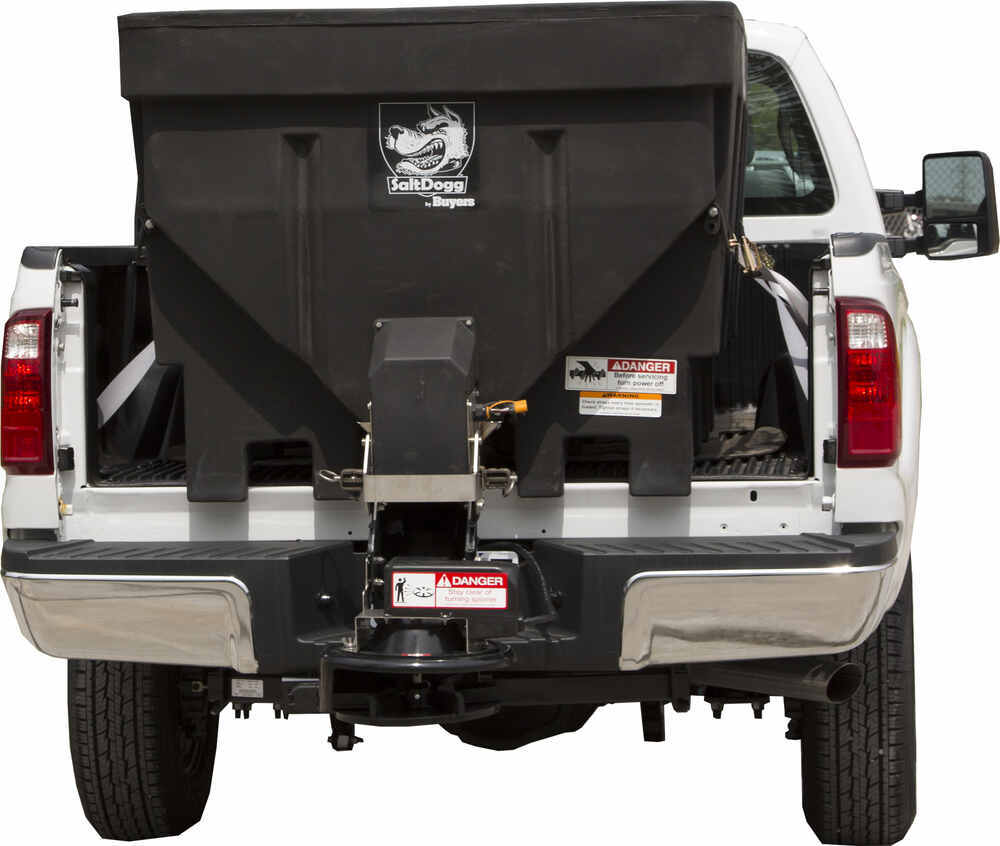
- Pros: Relatively inexpensive, easy to install and remove, suitable for smaller areas.
- Cons: Limited capacity, may not be ideal for heavy-duty use, can obstruct the tailgate.
-
Hopper Spreaders: Hopper spreaders feature a large hopper that holds the salt or de-icing material. A conveyor system, often driven by hydraulics or an electric motor, delivers the material to a spinner that distributes it across the road. These are ideal for larger areas and heavier use.
- Pros: Large capacity, durable construction, even spreading pattern, suitable for commercial use.
- Cons: More expensive than tailgate spreaders, require more space, heavier weight.
-
V-Box Spreaders: V-box spreaders are similar to hopper spreaders but have a V-shaped hopper that facilitates the flow of material. They are known for their efficient unloading and are commonly used for large-scale de-icing operations.
- Pros: Excellent material flow, high capacity, durable construction, suitable for heavy-duty applications.
- Cons: Most expensive option, require significant space, heavy weight.
-
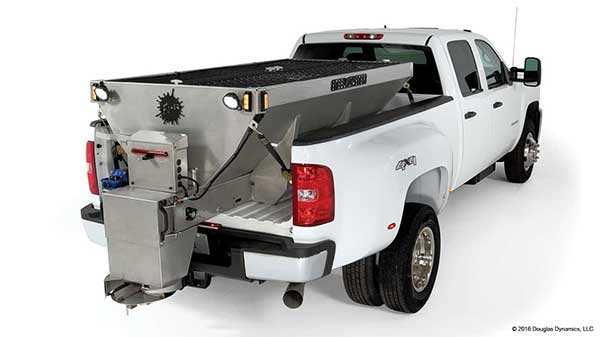
Under Tailgate Spreaders: These spreaders mount under the truck's tailgate, leaving the tailgate free for other uses. They are often hydraulically powered and offer precise material control.
- Pros: Unobstructed tailgate access, precise material control, good for tight spaces.
- Cons: Can be more complex to install, may require hydraulic connections.
Key Considerations When Choosing a Salt Spreader
Before making a purchase, carefully consider these factors:
- Area to be Covered: Determine the size of the area you need to de-ice. This will help you choose the appropriate hopper capacity.
- Frequency of Use: How often will you be using the spreader? For occasional use, a tailgate spreader might suffice. For daily use, a hopper or V-box spreader is a better investment.
- Type of De-Icing Material: Will you be using rock salt, calcium chloride, or another type of de-icing material? Some spreaders are better suited for certain materials.
- Truck Bed Size and Weight Capacity: Ensure the spreader you choose is compatible with your truck's bed size and weight capacity. Overloading your truck can damage the suspension and compromise safety.
- Power Source: Consider whether you prefer an electric, gas, or hydraulic-powered spreader. Electric spreaders are generally quieter and easier to maintain, while gas and hydraulic spreaders offer more power and reliability.
- Material of Construction: Look for spreaders made from durable materials like stainless steel or powder-coated steel to resist corrosion.
- Control System: Choose a spreader with a user-friendly control system that allows you to easily adjust the spread rate and pattern.
- Budget: Set a budget and research spreaders that fall within your price range. Remember that investing in a quality spreader can save you money in the long run by reducing material waste and downtime.
Benefits of Using a High-Quality Salt Spreader
Investing in a high-quality salt spreader offers several significant benefits:
- Improved Safety: Creates safer conditions for pedestrians and vehicles by effectively removing ice and snow.
- Reduced Liability: Minimizes the risk of accidents and lawsuits resulting from slips and falls.
- Increased Efficiency: Saves time and labor costs by allowing you to cover large areas quickly and evenly.
- Extended Equipment Lifespan: Durable construction and reliable performance ensure the spreader lasts for years to come.
- Enhanced Reputation: Demonstrates a commitment to safety and professionalism, enhancing your reputation with customers and clients.
Tips for Maintaining Your Salt Spreader
Proper maintenance is essential for prolonging the life of your salt spreader and ensuring its optimal performance. Here are some tips:
- Regular Cleaning: After each use, thoroughly clean the spreader to remove any salt or de-icing residue.
- Lubrication: Regularly lubricate all moving parts to prevent corrosion and ensure smooth operation.
- Inspection: Inspect the spreader for any signs of wear or damage, such as cracks, rust, or loose bolts.
- Storage: Store the spreader in a dry, covered area when not in use to protect it from the elements.
- Professional Service: Schedule regular maintenance checks with a qualified technician to identify and address any potential issues.
Potential Challenges and Solutions
- Clogging: Salt and de-icing materials can sometimes clog the spreader. To prevent this, use dry materials and clean the spreader regularly. Some spreaders also have features like vibrators or agitators to prevent clogging.
- Corrosion: Salt can be highly corrosive. Choose a spreader made from corrosion-resistant materials and regularly clean and lubricate it.
- Uneven Spreading: Uneven spreading can be caused by a variety of factors, such as improper calibration or a damaged spinner. Calibrate the spreader regularly and inspect the spinner for any damage.
- Mechanical Failures: Like any mechanical device, salt spreaders can experience mechanical failures. Perform regular maintenance and promptly repair any issues.
Price Table
| Spreader Type | Capacity (lbs) | Power Source | Material | Features | Price Range (USD) |
|---|---|---|---|---|---|
| Tailgate Spreader | 200-500 | Electric/Gas | Steel/Polymer | Adjustable Spread Width, Variable Speed Control | $300 - $800 |
| Hopper Spreader | 500-2000 | Electric/Hydraulic | Steel/Stainless | Spinner Control, Material Flow Adjustment | $1,500 - $5,000 |
| V-Box Spreader | 2000-5000+ | Hydraulic | Steel/Stainless | Auger Feed, In-Cab Controls, Vibrator | $4,000 - $10,000+ |
| Under Tailgate Spreader | 300-800 | Hydraulic | Steel/Stainless | Independent Spinner & Auger Control | $2,000 - $6,000 |
Frequently Asked Questions (FAQ)
-
Q: How do I calibrate my salt spreader?
- A: Calibration involves adjusting the spreader to dispense the correct amount of material. Refer to the manufacturer's instructions for specific calibration procedures. Generally, this involves setting the spread rate and measuring the amount of material dispensed over a set period.
-
Q: What type of salt is best for my spreader?
- A: Most spreaders can handle rock salt, but some are also compatible with calcium chloride and other de-icing materials. Consult the manufacturer's recommendations for the best type of salt for your specific spreader.
-
Q: How do I prevent my salt spreader from clogging?
- A: Use dry salt or de-icing material, clean the spreader regularly, and consider using a spreader with a vibrator or agitator.
-
Q: How often should I maintain my salt spreader?
- A: Perform basic maintenance after each use, such as cleaning and lubrication. Schedule a more thorough inspection and service at least once a year.
-
Q: Can I use a salt spreader to spread fertilizer?
- A: Some salt spreaders can be used to spread fertilizer, but it's essential to thoroughly clean the spreader after each use to prevent corrosion. Check the manufacturer's recommendations before using it for fertilizer.
Conclusion
Choosing the best salt spreader for your truck is a critical decision that can significantly impact your ability to manage ice and snow effectively. By understanding the different types of spreaders, considering your specific needs, and following proper maintenance procedures, you can ensure that you're well-equipped to tackle winter's challenges and maintain safe conditions for everyone. Remember to prioritize safety, efficiency, and durability when making your selection, and invest in a quality spreader that will provide reliable performance for years to come. Stay safe and prepared this winter season!