Truck scales, also known as weighbridges, are essential pieces of equipment for businesses that rely on trucking for shipping, receiving, and managing inventory. These scales accurately measure the weight of trucks and their cargo, ensuring compliance with legal weight limits, optimizing load distribution, and preventing costly fines and safety hazards. Choosing the "best" truck scale isn't a one-size-fits-all answer; it depends heavily on your specific needs, budget, and operational environment. This comprehensive guide will delve into the various aspects of truck scales, helping you make an informed decision.
Why Accurate Truck Weighing Matters
Finding the Best Truck Scale for Your Needs: A Comprehensive Guide
Before diving into the types and features, let's understand why accurate truck weighing is so crucial:
- Legal Compliance: Overweight trucks are a significant safety hazard and can cause damage to roads and bridges. Exceeding legal weight limits can result in substantial fines and penalties.
- Inventory Management: Accurate weight data is vital for tracking inventory levels, managing stock, and ensuring accurate billing for goods transported by weight.
- Load Optimization: Knowing the weight of each load allows for optimal distribution of cargo, preventing axle overloading and maximizing payload efficiency.
- Safety: Properly weighed and balanced loads contribute to safer driving conditions, reducing the risk of accidents caused by instability or mechanical failure.
- Profitability: Overloading can damage equipment and lead to premature wear and tear. Accurate weighing helps prevent these issues, contributing to long-term profitability.

Types of Truck Scales: Understanding the Options
The market offers various types of truck scales, each with its own advantages and disadvantages:
-
Above-Ground Truck Scales: These scales are installed on a concrete foundation and offer easier access for maintenance and cleaning. They are generally less expensive to install than pit scales. However, they require ramps for trucks to access the weighing platform, which can take up more space.

-
Pit Truck Scales: Pit scales are installed flush with the surrounding ground, eliminating the need for ramps. This makes them ideal for locations with limited space or where smooth traffic flow is essential. However, installation is more complex and expensive, and maintenance can be more challenging due to the confined space.
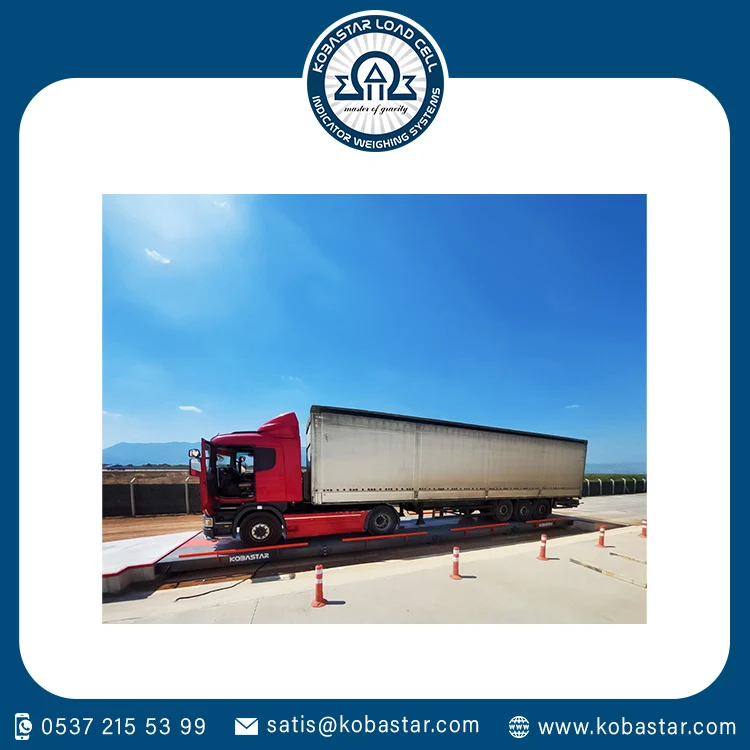
Portable Truck Scales: These scales are designed for easy transport and deployment. They are often used for temporary weighing stations or for applications where mobility is required. They typically consist of individual weighing pads placed under each axle. While convenient, they may not offer the same level of accuracy and durability as permanent scales.
-
Axle Scales: These scales weigh each axle individually, allowing for quick weight assessments and identification of axle overloads. They are commonly used at weigh stations and ports of entry. They can be static (requiring the truck to stop) or dynamic (allowing the truck to roll across the scale slowly).
-
Rail Scales: While technically not "truck" scales, they are relevant to intermodal operations. These scales weigh rail cars and are often integrated with truck scales for comprehensive weight management.
Key Features to Consider When Choosing a Truck Scale
Selecting the right truck scale involves considering several key features:
-
Capacity: The maximum weight the scale can accurately measure. Choose a capacity that exceeds the maximum weight of the trucks you will be weighing, with a comfortable safety margin. Consider the possibility of future heavier loads.
-
Accuracy: The degree to which the scale's readings reflect the true weight. Accuracy is often expressed as a percentage of the scale's capacity. Legal-for-trade (LFT) scales are required for commercial transactions based on weight.
-
Durability: The scale's ability to withstand heavy use, harsh weather conditions, and the rigors of a truck environment. Look for robust construction, high-quality materials, and protective coatings.
-
Material: Truck scales are typically constructed from steel or concrete. Steel scales are lighter and easier to install, while concrete scales offer superior durability and resistance to corrosion. Hybrid scales, combining steel and concrete, offer a balance of both.
-
Load Cells: The heart of the truck scale, load cells are the sensors that convert weight into an electrical signal. Choose load cells that are durable, accurate, and protected from environmental factors like moisture and lightning. Consider digital load cells for improved accuracy and diagnostics.
-
Indicator/Controller: The device that displays the weight readings and provides data management capabilities. Look for a user-friendly interface, clear display, and options for data storage, printing, and integration with other systems.
-
Software: Software can enhance the functionality of a truck scale by providing features like data logging, reporting, inventory management, and integration with accounting systems.
-
Calibration and Maintenance: Regular calibration is essential to ensure accuracy. Choose a scale that is easy to calibrate and maintain. Consider service contracts for ongoing maintenance and repairs.
-
Warranty: A comprehensive warranty provides peace of mind and protects your investment.
Benefits of Investing in a High-Quality Truck Scale
While the initial investment in a high-quality truck scale can be significant, the long-term benefits often outweigh the costs:
- Reduced Fines and Penalties: Accurate weighing ensures compliance with legal weight limits, preventing costly fines.
- Increased Efficiency: Optimized load distribution maximizes payload efficiency and reduces the number of trips required.
- Improved Safety: Properly weighed and balanced loads contribute to safer driving conditions.
- Enhanced Inventory Management: Accurate weight data allows for better tracking of inventory levels and improved stock management.
- Increased Profitability: Preventing overloading and optimizing load distribution can reduce wear and tear on equipment, saving money on maintenance and repairs.
- Improved Customer Satisfaction: Accurate weighing ensures fair and transparent billing for goods transported by weight.
Potential Challenges and Solutions
-
Challenge: High initial cost.
- Solution: Consider leasing options or purchasing a used scale in good condition. Focus on the long-term ROI based on reduced fines and improved efficiency.
-
Challenge: Complex installation.
- Solution: Hire a qualified and experienced contractor to install the scale properly.
-
Challenge: Maintenance requirements.
- Solution: Establish a regular maintenance schedule and consider a service contract with a reputable scale service provider.
-
Challenge: Environmental factors (weather, corrosion).
- Solution: Choose a scale made from durable materials and protected from the elements.
Tips for Maximizing the Value of Your Truck Scale
- Proper Training: Ensure that all personnel who operate the scale are properly trained on its use and maintenance.
- Regular Calibration: Calibrate the scale regularly to ensure accuracy.
- Preventative Maintenance: Perform regular preventative maintenance to keep the scale in good working order.
- Data Management: Utilize the scale's data management capabilities to track weight data and improve inventory management.
- Integration: Integrate the scale with other systems, such as accounting software, to streamline operations.
Table Price of Best Truck Scales
| Feature | Entry-Level Truck Scale | Mid-Range Truck Scale | High-End Truck Scale |
|---|---|---|---|
| Capacity (lbs) | 80,000 - 100,000 | 100,000 - 150,000 | 150,000+ |
| Accuracy | +/- 0.2% | +/- 0.1% | +/- 0.05% |
| Material | Steel | Steel/Concrete Hybrid | Concrete |
| Load Cells | Analog | Digital | Digital, Redundant |
| Indicator/Controller | Basic, Limited Features | Advanced, Data Logging | Advanced, Integration |
| Software | Optional | Standard | Comprehensive |
| Price (USD) | $20,000 - $40,000 | $40,000 - $70,000 | $70,000+ |
| Installation Cost (USD) | $5,000 - $10,000 | $10,000 - $20,000 | $20,000+ |
| Maintenance Cost (USD) | $500 - $1,000/year | $1,000 - $2,000/year | $2,000+/year |
Frequently Asked Questions (FAQ)
-
Q: What is a legal-for-trade truck scale?
- A: A legal-for-trade (LFT) truck scale is a scale that has been certified by a regulatory agency (such as the National Type Evaluation Program - NTEP in the US) to meet specific accuracy standards for commercial transactions where goods are bought or sold based on weight.
-
Q: How often should I calibrate my truck scale?
- A: It is recommended to calibrate your truck scale at least once a year, or more frequently if it is used heavily or exposed to harsh environmental conditions.
-
Q: What is the difference between analog and digital load cells?
- A: Analog load cells transmit an analog signal that is susceptible to interference, while digital load cells convert the weight signal into a digital signal that is more accurate and less susceptible to interference. Digital load cells also offer advanced diagnostics and troubleshooting capabilities.
-
Q: Can I integrate my truck scale with my accounting software?
- A: Yes, many truck scales offer integration capabilities with accounting software, allowing for seamless data transfer and improved financial management.
-
Q: What factors affect the accuracy of a truck scale?
- A: Several factors can affect the accuracy of a truck scale, including temperature variations, wind, debris on the scale platform, and improper loading.
Conclusion
Choosing the best truck scale requires careful consideration of your specific needs, budget, and operational environment. By understanding the different types of scales, key features, and potential challenges, you can make an informed decision that will improve efficiency, reduce costs, and ensure compliance with legal weight limits. Investing in a high-quality truck scale is a long-term investment that can provide significant benefits for your business.