The question "How many yards does a dump truck hold?" seems simple enough, but the answer is surprisingly complex. Dump trucks are the workhorses of construction, landscaping, and demolition projects, responsible for hauling everything from gravel and sand to concrete and debris. Knowing the capacity of a dump truck is crucial for accurate project planning, efficient material management, and ultimately, cost control. This comprehensive guide will delve into the various factors that influence a dump truck's capacity, helping you understand the nuances and make informed decisions for your next project.
Introduction: The Importance of Understanding Dump Truck Capacity
How Many Yards Does a Dump Truck Hold? A Comprehensive Guide
When planning any construction or landscaping project, accurate estimation of material quantities is paramount. Ordering too little material can lead to delays, while ordering too much results in unnecessary costs for disposal or storage. Dump trucks are the primary means of transporting these materials, and knowing their capacity – typically measured in cubic yards – is essential for efficient logistics.
Understanding a dump truck's capacity allows you to:
- Accurately estimate the number of truckloads needed: This directly impacts project timelines and overall costs.
- Optimize material ordering: Avoid over- or under-ordering materials, saving money and minimizing waste.
- Negotiate fair prices with contractors: Having a clear understanding of hauling capacity empowers you during negotiations.
- Ensure compliance with weight regulations: Overloading a dump truck can lead to fines and safety hazards.
This guide will equip you with the knowledge to navigate the complexities of dump truck capacity and make informed decisions for your project.
Factors Affecting Dump Truck Capacity
The amount of material a dump truck can hold is influenced by several key factors:
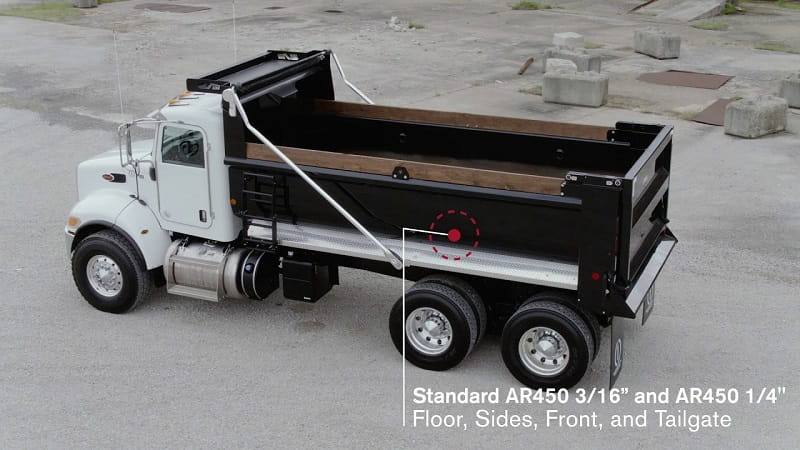
- Truck Size and Type: This is the most significant determinant. Dump trucks come in various sizes, from small single-axle trucks to large multi-axle behemoths.
- Body Design: The shape and configuration of the dump bed significantly impact its volume. Tapered beds, for instance, may offer easier unloading but can reduce capacity.
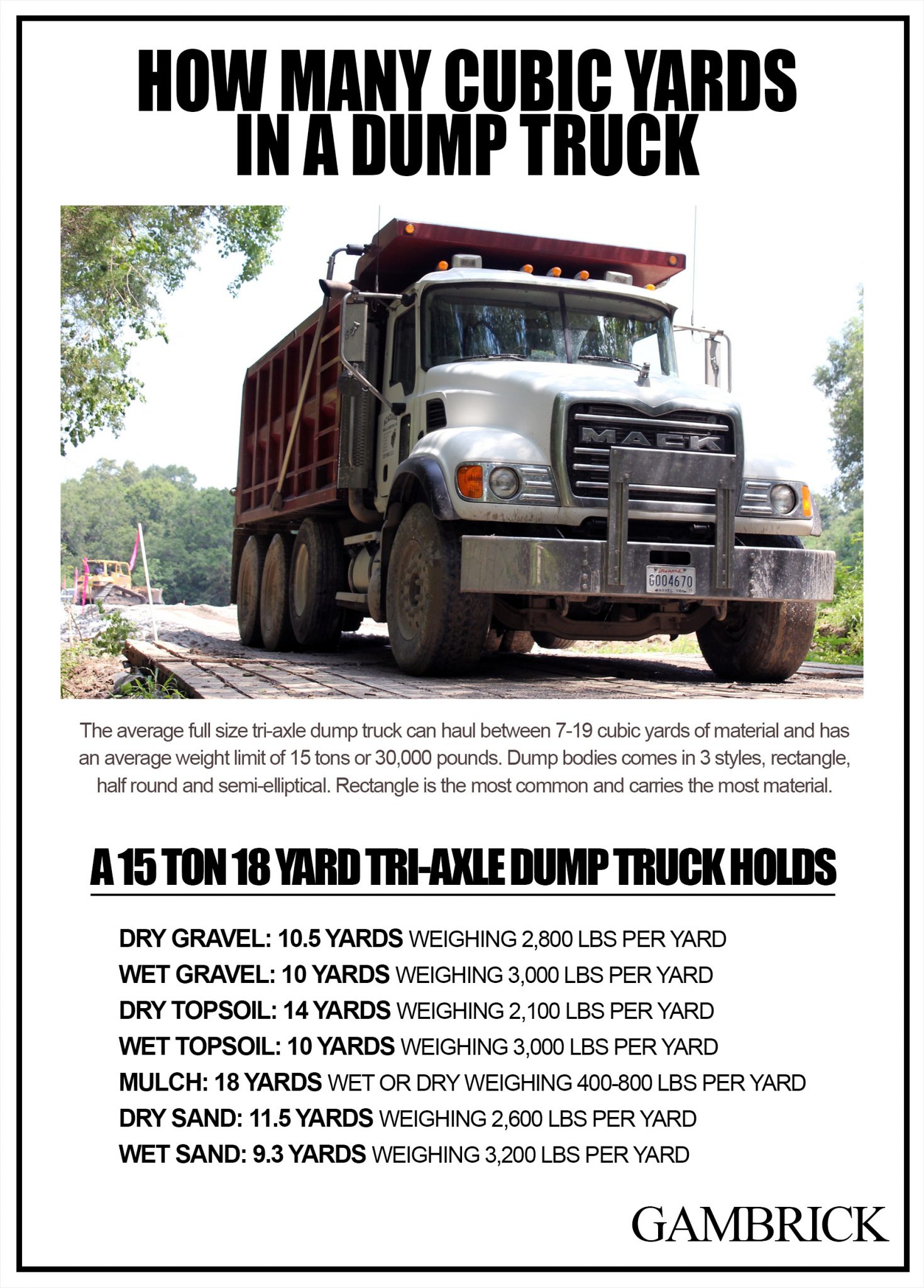
- Material Density: The weight of the material being hauled plays a crucial role. A cubic yard of gravel weighs significantly more than a cubic yard of mulch.
- Legal Weight Restrictions: Local and federal regulations impose weight limits on vehicles, restricting the amount of material that can be legally transported, regardless of the truck's physical capacity.
- Heaped vs. Level Load: A "heaped" load, where the material extends above the sides of the dump bed, increases the volume but can also be subject to legal restrictions and safety concerns.
- Manufacturer Specifications: Always refer to the manufacturer's specifications for the specific truck model to determine its rated capacity.
Types of Dump Trucks and Their Typical Capacities
Different types of dump trucks are designed for specific purposes and have varying capacities. Here's a breakdown of common types and their typical cubic yard capacities:
-
Standard Dump Truck (Single Axle): These smaller trucks are often used for residential projects and lighter loads.
- Typical Capacity: 8-10 cubic yards
-
Tandem Axle Dump Truck (Tri-Axle): These are the most common type of dump truck and are versatile for a wide range of applications.
- Typical Capacity: 10-14 cubic yards
-
Quad Axle Dump Truck: These trucks have four axles, allowing them to carry heavier loads than tandem axle trucks.
- Typical Capacity: 15-20 cubic yards
-
Semi-Trailer End Dump Truck: These are larger trucks used for hauling large quantities of materials over long distances.
- Typical Capacity: 20-40 cubic yards
-
Transfer Dump Truck: This setup involves a standard dump truck pulling a separate trailer, effectively doubling the hauling capacity.
- Typical Capacity: 25-30 cubic yards (combined)
-
Side Dump Truck: These trucks dump materials to the side, making them useful for road construction and paving projects.
- Typical Capacity: 15-25 cubic yards
-
Articulated Dump Truck (Off-Road Dump Truck): These trucks are designed for off-road use in construction and mining sites.
- Typical Capacity: 15-40 cubic yards (depending on size)
Important Considerations: Weight vs. Volume
It's crucial to understand the difference between a dump truck's volume capacity (measured in cubic yards) and its weight capacity (measured in tons). While a truck might have the volume to hold a certain amount of material, it might exceed its legal weight limit long before the bed is full, especially with dense materials like gravel, concrete, or wet soil.
Calculating Material Weight:
To determine how much of a specific material a dump truck can legally carry, you need to know the material's density, typically expressed in pounds per cubic yard (lbs/yd³). Here are some common densities:
- Gravel: 2700 lbs/yd³
- Sand: 2700 lbs/yd³
- Topsoil: 2000-2500 lbs/yd³
- Concrete: 4050 lbs/yd³
- Asphalt: 2200 lbs/yd³
- Mulch: 800-1200 lbs/yd³
Example:
Let's say you have a tandem axle dump truck with a legal weight limit of 14 tons (28,000 lbs) and a capacity of 12 cubic yards. You want to haul gravel, which has a density of 2700 lbs/yd³.
- Calculate the maximum weight of gravel the truck can legally carry: 28,000 lbs
- Calculate the weight of 12 cubic yards of gravel: 12 yd³ * 2700 lbs/yd³ = 32,400 lbs
- Compare the two weights: The truck's volume capacity (12 yd³) would result in a weight of 32,400 lbs, which exceeds the legal weight limit of 28,000 lbs.
Therefore, in this scenario, the truck can only legally carry approximately 10.37 cubic yards of gravel (28,000 lbs / 2700 lbs/yd³ = 10.37 yd³).
Tips for Optimizing Dump Truck Usage
- Know your material's density: This is crucial for accurate weight calculations.
- Consult with your contractor: Discuss their dump truck options and their capacity based on the specific material you need hauled.
- Check local weight regulations: Ensure you are complying with all applicable laws.
- Consider using multiple smaller trucks: If weight restrictions are a concern, using multiple smaller trucks can be more efficient than trying to maximize the load on a larger truck.
- Properly load the truck: Distribute the material evenly to maintain balance and prevent overloading specific axles.
- Maintain your dump truck: Regular maintenance ensures optimal performance and prevents breakdowns.
Potential Challenges and Solutions
- Overloading: This is a common problem that can lead to fines, safety hazards, and damage to the truck.
- Solution: Carefully calculate the weight of the material being hauled and adhere to legal weight limits. Use scales or load cells to accurately measure the weight.
- Uneven Loading: This can affect the truck's stability and handling.
- Solution: Ensure the material is distributed evenly throughout the dump bed.
- Material Spillage: This can create safety hazards and environmental concerns.
- Solution: Use tarps or covers to secure the load and prevent spillage, especially when hauling loose materials.
- Limited Access: Some job sites may have limited access for larger dump trucks.
- Solution: Consider using smaller trucks or articulated dump trucks that are designed for tight spaces.
Price Table: Dump Truck Rental and Material Costs
| Item | Description | Estimated Cost (USD) | Notes |
|---|---|---|---|
| Tandem Axle Dump Truck Rental (per day) | Rental of a standard tandem axle dump truck (10-14 cubic yard capacity) | $300 - $600 | Prices vary based on location, rental company, and availability. Includes truck only, not driver or fuel. |
| Single Axle Dump Truck Rental (per day) | Rental of a smaller single axle dump truck (8-10 cubic yard capacity) | $200 - $400 | Suitable for smaller projects and tighter spaces. |
| Dump Truck Hauling Service (per load) | Hiring a dump truck with a driver to haul a specific load of material. | $150 - $500 | Price depends on distance, material type, truck size, and local market conditions. |
| Gravel (per cubic yard) | Cost of gravel delivered to the job site. | $25 - $75 | Varies based on gravel type, location, and supplier. |
| Sand (per cubic yard) | Cost of sand delivered to the job site. | $20 - $60 | Varies based on sand type, location, and supplier. |
| Topsoil (per cubic yard) | Cost of topsoil delivered to the job site. | $30 - $90 | Varies based on quality, location, and supplier. |
| Concrete Disposal (per load) | Cost to dispose of concrete debris at a designated landfill or recycling facility. | $100 - $400 | Price depends on the quantity of concrete, location, and disposal facility fees. |
| Demolition Debris Disposal (per load) | Cost to dispose of general demolition debris at a designated landfill. | $100 - $500 | Price depends on the type and quantity of debris, location, and landfill fees. |
| Fuel Surcharge (per load/day) | Additional charge to cover fluctuating fuel costs. | $20 - $50 | Common practice in the hauling industry. |
Note: These are estimated prices and may vary significantly based on location, supplier, time of year, and specific project requirements. It's always best to obtain quotes from multiple sources to ensure you're getting the best possible price.
Conclusion: Making Informed Decisions
Determining how many yards a dump truck holds is not a straightforward calculation. It requires considering the truck's size and type, the material's density, legal weight restrictions, and other factors. By understanding these variables and utilizing the information provided in this guide, you can accurately estimate your hauling needs, optimize material ordering, and ensure efficient and cost-effective project execution. Remember to always prioritize safety and compliance with local regulations. A little planning and research can go a long way in ensuring a smooth and successful project.
Frequently Asked Questions (FAQ)
Q: How can I accurately determine the volume capacity of a dump truck?
A: The best way is to consult the manufacturer's specifications for the specific truck model. You can also visually inspect the dump bed and estimate the volume by measuring its length, width, and height (in feet) and then converting to cubic yards (1 cubic yard = 27 cubic feet).
Q: What happens if I overload a dump truck?
A: Overloading a dump truck can result in fines, safety hazards (such as reduced braking ability and increased risk of accidents), and damage to the truck's suspension and tires.
Q: Is it better to have a heaped or level load?
A: While a heaped load increases the volume of material being hauled, it can also be subject to legal restrictions and safety concerns. A level load is generally safer and more compliant with regulations.
Q: How do I find a reputable dump truck hauling service?
A: Ask for recommendations from contractors, suppliers, or other professionals in the construction or landscaping industry. Check online reviews and verify that the company is licensed and insured.
Q: Can I rent a dump truck myself, or do I need to hire a professional driver?
A: You can rent a dump truck yourself if you have the necessary licenses and experience. However, for safety and efficiency, it's often best to hire a professional driver, especially for larger trucks or complex projects.
Q: Are there different types of dump trucks for different materials?
A: While most dump trucks can haul a variety of materials, some are specifically designed for certain applications. For example, side dump trucks are often used for road construction, while articulated dump trucks are designed for off-road use.
Q: What is the difference between a cubic yard and a ton?
A: A cubic yard is a unit of volume, while a ton is a unit of weight. The relationship between the two depends on the density of the material.
Q: How do I calculate the cost of hauling materials with a dump truck?
A: The cost depends on several factors, including the distance to be hauled, the material being hauled, the size of the truck, and the hourly or per-load rate charged by the hauling service. Get quotes from multiple providers to compare prices.