Introduction: Why Penske Truck Weight Matters
Moving goods across the country or even locally requires careful planning, and one of the most crucial elements is understanding the weight limitations of your vehicle. When you're using a Penske truck for your move or business, knowing the truck's weight specifications is not just a suggestion; it's a legal requirement, a safety imperative, and a key factor in ensuring the efficiency and cost-effectiveness of your operation. Overloading a truck can lead to serious consequences, including hefty fines, vehicle damage, increased accident risk, and even legal liability. This comprehensive guide will delve into the intricacies of Penske truck weight, providing you with the knowledge and tools necessary to stay compliant, safe, and in control. We'll cover everything from identifying weight limits to practical tips for loading and managing your Penske truck effectively.
Penske Truck Weight: A Comprehensive Guide to Understanding and Managing Load Limits
Section 1: Understanding Gross Vehicle Weight Rating (GVWR) and Other Key Terms
Before you even begin to consider loading your Penske truck, it's crucial to understand the terminology surrounding vehicle weight. Here's a breakdown of the essential terms:
- Gross Vehicle Weight Rating (GVWR): This is the maximum permissible weight of the truck, including the truck itself, the cargo, passengers, fuel, and all other items inside. The GVWR is determined by the manufacturer (Penske, in this case) and is based on the truck's design and capabilities. Exceeding the GVWR is illegal and dangerous.
- Curb Weight: This is the weight of the truck as it sits empty, without any cargo, passengers, or fuel. It includes all standard equipment.
- Payload Capacity: This is the maximum weight of cargo, passengers, and other items that the truck can carry. It's calculated by subtracting the curb weight from the GVWR. Payload Capacity = GVWR - Curb Weight.
- Gross Combination Weight Rating (GCWR): This is the maximum permissible weight of the truck and any attached trailer, including the cargo in both the truck and the trailer.
- Axle Weight Rating: This is the maximum weight that each axle can support. It's important to distribute weight evenly to avoid exceeding axle weight limits.
Why are these terms important? Knowing these terms will allow you to determine exactly how much you can load into the Penske truck before you cause damage.
Section 2: Finding the Weight Information for Your Penske Truck
Locating the weight information for your specific Penske truck is the first step in ensuring compliance. Here's where you can find it:
- Driver's Side Door Jamb: This is the most common location. Look for a sticker or plate that displays the GVWR, axle weight ratings, and other important weight information.
- Owner's Manual: The owner's manual will contain detailed specifications for the truck, including weight limits.
- Penske Rental Agreement: Your rental agreement may also include information about the truck's GVWR and payload capacity.
- Penske Website or Customer Service: If you're having trouble finding the information, contact Penske customer service or check their website, providing the truck's VIN (Vehicle Identification Number). The VIN is usually located on the driver's side dashboard, visible through the windshield, and on your rental agreement.

Important Considerations: Always verify the weight information on the truck itself. Do not rely solely on information provided by the rental agent. If there is any discrepancy, clarify it with Penske before loading the truck.
Section 3: Different Types of Penske Trucks and Their Weight Capacities
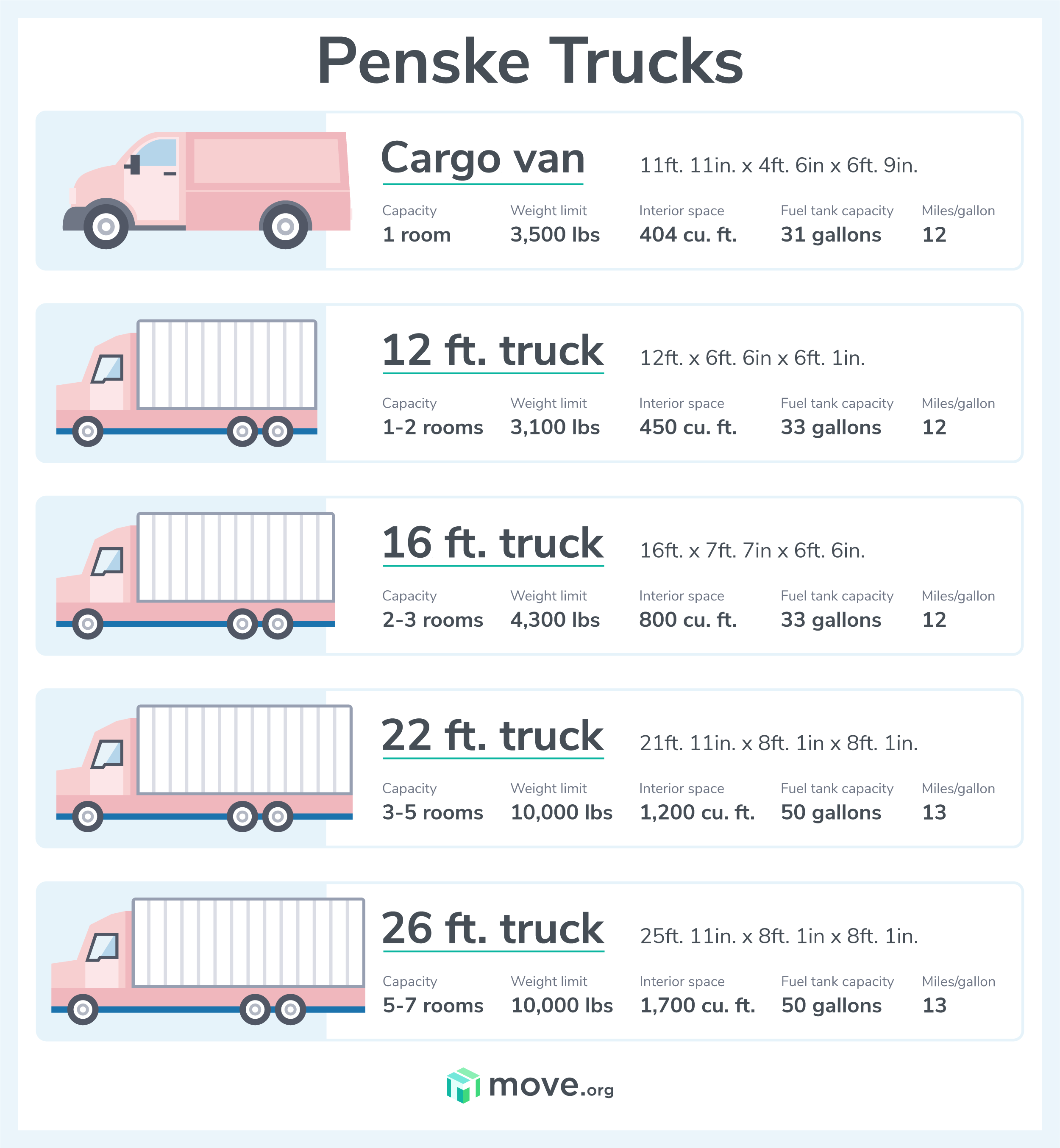
Penske offers a variety of truck sizes and configurations, each with different weight capacities. Here's a general overview of some common Penske truck types and their approximate GVWRs:
| Truck Type | Typical GVWR (Approximate) | Typical Payload Capacity (Approximate) | Common Uses |
|---|---|---|---|
| Cargo Van | 9,500 lbs - 10,000 lbs | 2,500 lbs - 3,500 lbs | Small moves, deliveries, light-duty hauling |
| 12-Foot Box Truck | 12,500 lbs - 14,500 lbs | 4,000 lbs - 5,000 lbs | Small apartment moves, business deliveries |
| 16-Foot Box Truck | 16,000 lbs - 19,500 lbs | 5,000 lbs - 7,000 lbs | Medium-sized moves, larger deliveries |
| 22-Foot Box Truck | 22,000 lbs - 26,000 lbs | 8,000 lbs - 10,000 lbs | Large apartment or small house moves |
| 26-Foot Box Truck | 26,000 lbs - 33,000 lbs | 10,000 lbs - 12,000 lbs | Full house moves, commercial hauling |
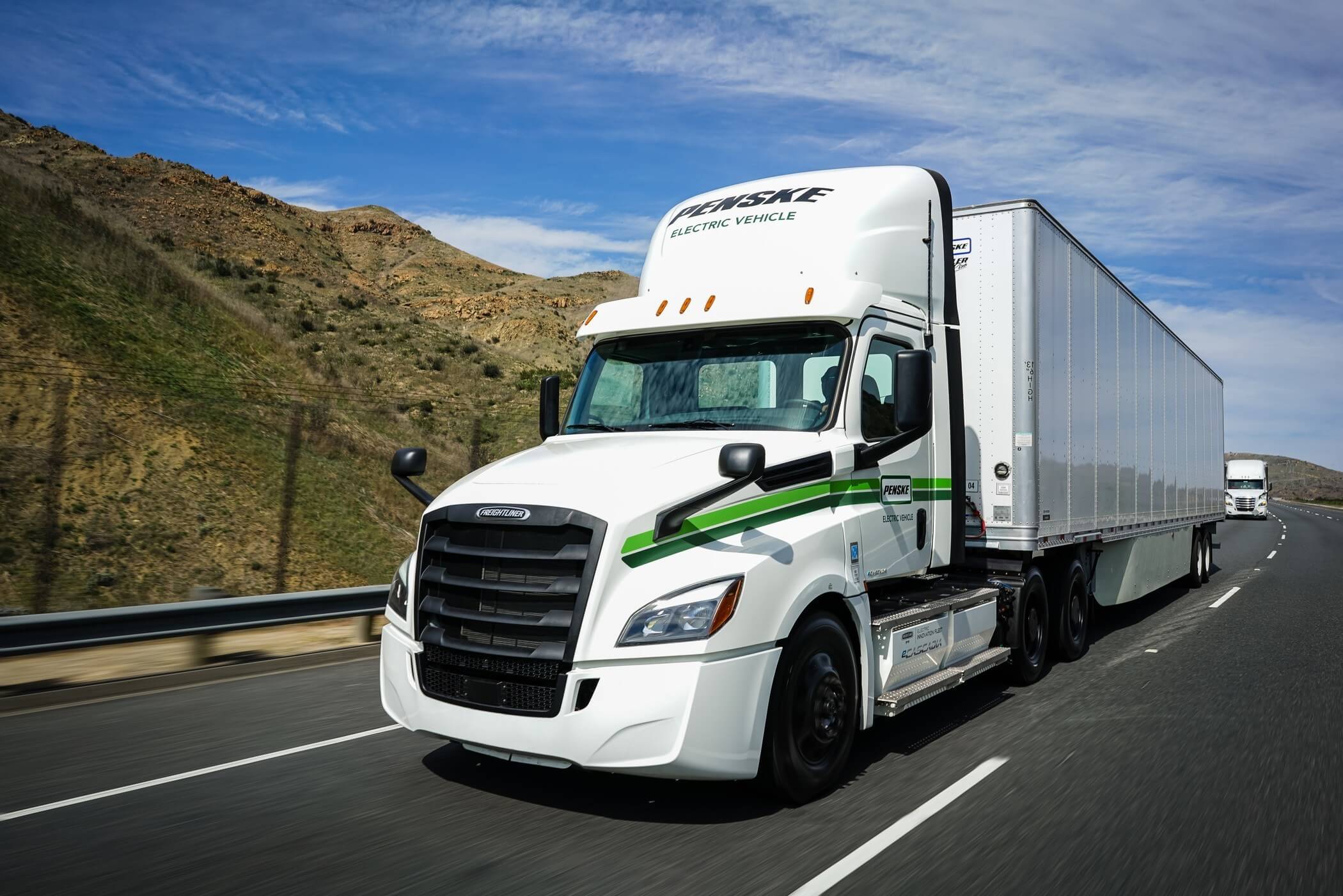
| Tractor-Trailer (Semi-Truck) | 80,000 lbs (GCWR) | Varies significantly | Long-haul freight transportation |
Disclaimer: These are approximate values. The actual GVWR and payload capacity will vary depending on the specific truck model, engine, and other options. Always refer to the sticker on the truck itself for the accurate weight information.
Section 4: How to Calculate Your Load Weight and Stay Within Limits
Accurately estimating the weight of your load is essential to avoid overloading the truck. Here's a step-by-step guide:
- Inventory Your Items: Create a detailed inventory of all the items you plan to load.
- Estimate Individual Weights: Estimate the weight of each item. Use online resources, manufacturer specifications, or a bathroom scale for smaller items. Err on the side of caution and overestimate rather than underestimate.
- Sum the Weights: Add up the estimated weights of all items to get the total estimated load weight.
- Account for Passengers and Fuel: Don't forget to include the weight of all passengers and a full tank of fuel in your calculations. A gallon of gasoline weighs approximately 6 pounds.
- Compare to Payload Capacity: Compare the total estimated weight (load + passengers + fuel) to the truck's payload capacity. If the total weight exceeds the payload capacity, you'll need to reduce your load.
- Consider Weight Distribution: Even if the total weight is within the limits, ensure that the weight is distributed evenly throughout the truck to avoid exceeding axle weight ratings.
Example: Let's say you're renting a 16-foot Penske truck with a GVWR of 19,500 lbs and a curb weight of 12,500 lbs. This gives you a payload capacity of 7,000 lbs. You estimate your load to weigh 6,500 lbs, you have two passengers weighing a combined 300 lbs, and the truck has a full tank of fuel (approximately 50 gallons x 6 lbs/gallon = 300 lbs). The total weight is 6,500 lbs + 300 lbs + 300 lbs = 7,100 lbs. In this scenario, you are exceeding the payload capacity by 100 lbs and will need to remove some items.
Section 5: Practical Tips for Loading and Weight Distribution
Proper loading and weight distribution are crucial for safe and efficient operation. Here are some practical tips:
- Load Heavier Items First: Place heavier items towards the front of the truck, closer to the cab, and over the axles. This helps to maintain stability and prevents the rear of the truck from sagging.
- Distribute Weight Evenly: Distribute the weight evenly across the width of the truck. Avoid concentrating weight on one side, as this can affect handling and stability.
- Secure Your Load: Use straps, ropes, and blankets to secure your load and prevent items from shifting during transit. Shifting cargo can change the weight distribution and create dangerous handling situations.
- Use Furniture Pads: Use furniture pads to protect your items from damage and to prevent them from sliding around.
- Avoid Overloading Axles: Be mindful of axle weight ratings. If you're carrying a particularly heavy item, position it carefully to distribute the weight across multiple axles.
- Regularly Check Your Load: During long trips, stop periodically to check that your load is still secure and that nothing has shifted.
Section 6: Potential Challenges and Solutions
Even with careful planning, you may encounter challenges related to Penske truck weight. Here are some common challenges and their solutions:
- Underestimating Weight: It's easy to underestimate the weight of your belongings. Use a bathroom scale and online resources to get accurate estimates.
- Limited Space: Sometimes, you may have more items than space. Consider downsizing, selling, or donating unwanted items.
- Uneven Weight Distribution: Achieving perfect weight distribution can be challenging. Use shims or packing materials to level out the load and prevent items from shifting.
- Unexpected Items: You may discover additional items you need to move at the last minute. Re-evaluate your load and remove items if necessary.
- Finding Accurate Weight Information: If you can't find the weight information for your truck, contact Penske customer service or visit a weigh station.
Section 7: The Legal Consequences of Overloading
Overloading a Penske truck can result in serious legal consequences, including:
- Fines: Fines for overweight violations can be substantial and vary depending on the state and the amount of the overload.
- Out-of-Service Orders: Your truck may be placed out of service, meaning you're not allowed to continue driving until the overload is corrected.
- Damage to the Truck: Overloading can damage the truck's suspension, brakes, and tires, leading to costly repairs.
- Increased Accident Risk: Overloaded trucks are more difficult to control and have a higher risk of accidents.
- Legal Liability: If an accident occurs due to overloading, you could be held liable for damages and injuries.
Section 8: Utilizing Weigh Stations for Accurate Measurement
If you're unsure about your truck's weight, especially for larger loads, consider using a weigh station. These stations are typically located along highways and are designed to measure the weight of commercial vehicles. Weigh stations provide accurate readings of the truck's total weight and axle weights, allowing you to verify that you're within legal limits.
Section 9: Penske's Policies on Overweight Trucks
Penske, like other reputable truck rental companies, has strict policies regarding overweight vehicles. Violating these policies can result in penalties, including:
- Fines: Penske may pass on any fines received due to overloading to the renter.
- Contract Termination: Penske may terminate the rental agreement if the truck is consistently overloaded or if damage occurs due to overloading.
- Additional Fees: Penske may charge additional fees for repairs or maintenance caused by overloading.
Section 10: Ensuring a Safe and Compliant Move
Moving goods, whether for personal or business purposes, involves a degree of risk. Overweight trucks can lead to serious consequences, including fines, out-of-service orders, and damage to the vehicle. You can follow these steps to ensure safe and compliant:
- Plan in advance.
- Make a list of all the items you need to move and estimate their weight.
- Consult a professional moving company.
- Rent the right size truck.
- Take it slow and easy.
Penske Truck Weight Price Table:
| Feature | Description | Price |
|---|---|---|
| GVWR (Gross Vehicle Weight Rating) | The maximum permissible weight of the truck, including the truck itself, the cargo, passengers, fuel, and all other items inside. | Varies based on truck type. See Section 3 for approximate GVWR ranges. |
| Curb Weight | The weight of the truck as it sits empty, without any cargo, passengers, or fuel. | Varies based on truck type. |
| Payload Capacity | The maximum weight of cargo, passengers, and other items that the truck can carry. Payload Capacity = GVWR - Curb Weight. | Varies based on truck type. See Section 3 for approximate Payload Capacity ranges. |
| Rental Cost | The cost of renting a Penske truck, which may vary depending on the size of the truck, the length of the rental, and the location. | Varies based on truck type, rental duration, and location. Contact Penske directly for pricing. |
| Fuel Cost | The cost of fuel needed to operate the Penske truck, which may vary depending on the distance traveled and the fuel efficiency of the truck. | Varies based on distance, fuel efficiency, and current fuel prices. |
| Additional Fees | Additional fees, such as insurance, mileage fees, and late fees, which may be charged by Penske. | Varies. Refer to your rental agreement for details. |
| Fines for Overweight Violations | Fines for overweight violations can be substantial and vary depending on the state and the amount of the overload. | Varies based on jurisdiction and severity of overload. |
Conclusion: Prioritizing Safety and Compliance
Understanding and managing Penske truck weight is paramount for safety, compliance, and cost-effectiveness. By carefully estimating your load weight, distributing it properly, and adhering to GVWR and axle weight limits, you can ensure a smooth and uneventful move or transport operation. Always prioritize safety and never compromise on weight limits. When in doubt, seek professional advice or utilize weigh stations to verify your load. By taking these precautions, you can protect yourself, your cargo, and others on the road.
Frequently Asked Questions (FAQ)
Q: Where can I find the GVWR for my Penske truck?
A: Check the driver's side door jamb, the owner's manual, or your Penske rental agreement. You can also contact Penske customer service with the truck's VIN.
Q: What happens if I overload a Penske truck?
A: You could face fines, have your truck placed out of service, damage the truck, increase the risk of accidents, and be held liable for damages and injuries.
Q: How can I accurately estimate the weight of my belongings?
A: Create a detailed inventory, use online resources, manufacturer specifications, or a bathroom scale to estimate the weight of each item.
Q: How do I distribute weight properly in a Penske truck?
A: Load heavier items towards the front of the truck, closer to the cab, and over the axles. Distribute the weight evenly across the width of the truck.
Q: What should I do if I think my Penske truck is overweight?
A: Remove items from the truck until you're below the GVWR. Consider using a weigh station to verify your weight.
Q: Does Penske offer assistance with weight calculations?
A: While Penske provides weight specifications, it's your responsibility to calculate and manage your load weight. Consult with moving professionals or use online resources for assistance.
Q: What are the best practices for securing my load in a Penske truck?
A: Use straps, ropes, and blankets to secure your load and prevent items from shifting during transit.
Q: Can I rent a trailer from Penske to increase my carrying capacity?
A: Yes, Penske offers trailers for rent. However, you must ensure that you do not exceed the GCWR (Gross Combination Weight Rating) for the truck and trailer combination.