The food truck industry is booming. From gourmet tacos to artisanal coffee, mobile eateries are transforming the culinary landscape. But behind every successful food truck is a meticulously planned and efficiently designed kitchen. A well-executed Food Truck Kitchen Layout is more than just arranging equipment; it's about maximizing space, streamlining workflow, ensuring safety, and ultimately, boosting profitability. In this comprehensive guide, we'll delve into the critical aspects of food truck kitchen layout, providing practical advice, actionable insights, and essential considerations for aspiring and seasoned food truck owners alike.
Why a Well-Designed Food Truck Kitchen Layout Matters
The Ultimate Guide to Food Truck Kitchen Layout: Maximize Space, Efficiency, and Profit
Imagine trying to prepare a complex meal in a cramped, disorganized space. The result? Frustration, wasted time, and compromised quality. A food truck kitchen is even more challenging, demanding maximum efficiency within a limited footprint. A poorly designed layout can lead to:
- Reduced Efficiency: Employees bumping into each other, struggling to access ingredients, and wasting time moving between stations.
- Increased Food Waste: Improper storage and difficult access to ingredients can lead to spoilage.
- Safety Hazards: Overcrowding and poor placement of equipment can increase the risk of accidents, burns, and cross-contamination.
- Lower Productivity: Inefficient workflow directly impacts the number of customers you can serve and ultimately, your revenue.
- Unhappy Employees: A cramped and uncomfortable workspace leads to employee dissatisfaction and higher turnover.
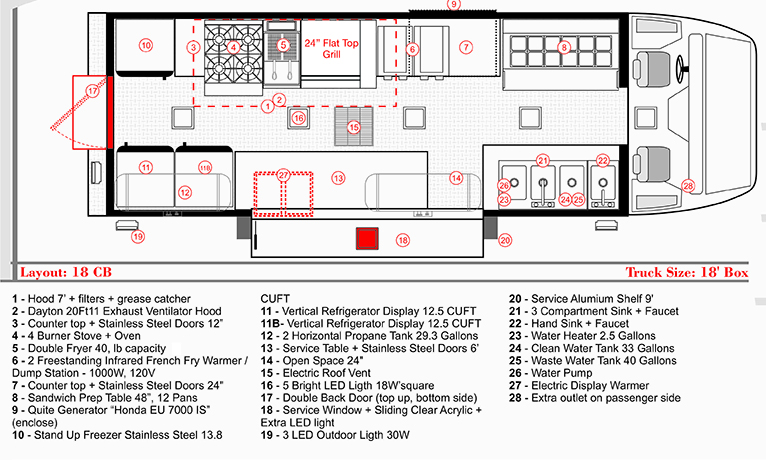
Conversely, a well-designed food truck kitchen layout can address these issues, creating a smooth, safe, and profitable operation. It's an investment that pays dividends in efficiency, employee satisfaction, and customer service.
Key Considerations Before You Start Planning
Before diving into the specifics of layout, it's crucial to consider these foundational elements:
- Menu: Your menu dictates the type and quantity of equipment needed. A burger truck will require different equipment than a crepe truck.
- Truck Size and Configuration: The dimensions of your truck, including the location of windows, doors, and wheel wells, will significantly influence your layout options.
- Budget: Establishing a realistic budget will help you prioritize essential equipment and explore cost-effective layout solutions.
- Local Regulations: Familiarize yourself with local health codes and regulations regarding food handling, sanitation, ventilation, and fire safety. These regulations will directly impact your layout.
- Power and Plumbing: Determine your power and water requirements and ensure your truck is adequately equipped to handle them. Plan for the location of generators, water tanks, and wastewater disposal.
- Staffing: Consider the number of employees working in the truck and design the layout to accommodate their movement and workflow.


Essential Elements of a Food Truck Kitchen Layout
A well-structured food truck kitchen layout typically incorporates these key elements:
-
Receiving/Storage Area:
- Purpose: Dedicated space for receiving deliveries and storing ingredients.
- Considerations: Maximize vertical storage with shelving units. Prioritize dry storage for non-perishable items.
- Equipment: Shelving units, ingredient bins, potentially a small refrigerator for frequently used ingredients.
- Placement: Ideally located near the entrance for easy deliveries.
-
Preparation Area:
- Purpose: Space for chopping vegetables, assembling ingredients, and prepping food items.
- Considerations: Durable, easy-to-clean countertops. Adequate lighting. Proximity to storage and cooking areas.
- Equipment: Cutting boards, knives, prep tables, food processors (if needed).
- Placement: Strategically located between storage and cooking areas.
-
Cooking Area:
- Purpose: The heart of the kitchen, where food is cooked to order.
- Considerations: Efficient use of space. Proper ventilation to remove smoke and odors. Fire suppression system.
- Equipment: Grills, fryers, stovetops, ovens, microwave (depending on the menu).
- Placement: Centrally located for easy access from all areas of the kitchen.
-
Service/Order Fulfillment Area:
- Purpose: Where orders are assembled, packaged, and handed to customers.
- Considerations: Clear visibility of the cooking area. Ample space for order staging. POS system integration.
- Equipment: Heat lamps, warming drawers, packaging materials, POS system.
- Placement: Directly accessible to customers through a service window.
-
Cleaning/Sanitation Area:
- Purpose: Designated area for washing dishes, sanitizing surfaces, and maintaining cleanliness.
- Considerations: Three-compartment sink (required by many health codes). Handwashing station. Adequate drainage.
- Equipment: Three-compartment sink, handwashing sink, dish drying rack, sanitizer solutions.
- Placement: Separated from food preparation areas to prevent contamination.
-
Refrigeration Area:
- Purpose: Storing perishable ingredients at safe temperatures.
- Considerations: Adequate capacity for your menu. Energy-efficient models. Easy access for restocking.
- Equipment: Refrigerators, freezers, reach-in coolers.
- Placement: Consider proximity to preparation and storage areas.
Workflow: The Key to Efficiency
The flow of food and staff within the kitchen is paramount. A well-planned workflow minimizes unnecessary movement, reduces bottlenecks, and maximizes productivity. Consider the following:
- Circular Flow: Design the layout so that ingredients flow smoothly from storage to preparation to cooking to service, ideally in a circular pattern.
- Separate Zones: Clearly define distinct zones for each function (receiving, prep, cooking, service, cleaning).
- Minimize Cross-Traffic: Reduce the number of times employees need to cross each other's paths.
- Optimize Reach: Arrange frequently used items within easy reach of workstations.
Practical Tips for Maximizing Space
Food trucks are inherently space-constrained. Here are some tips for making the most of every inch:
- Vertical Storage: Utilize shelving units, hanging racks, and overhead storage to maximize vertical space.
- Multifunctional Equipment: Choose equipment that can perform multiple functions (e.g., a convection oven that can also be used as a warming drawer).
- Foldable or Collapsible Surfaces: Use foldable prep tables or collapsible shelves that can be stored away when not in use.
- Custom Fabrication: Consider custom-built cabinets and countertops to fit the specific dimensions of your truck.
- Rolling Carts: Use rolling carts to transport ingredients and equipment between stations.
Potential Challenges and Solutions
- Challenge: Limited Space
- Solution: Vertical storage, multifunctional equipment, custom fabrication.
- Challenge: Ventilation Issues
- Solution: Powerful exhaust hood, strategic placement of cooking equipment.
- Challenge: Maintaining Cleanliness
- Solution: Dedicated cleaning area, frequent cleaning schedule, durable and easy-to-clean surfaces.
- Challenge: Meeting Health Code Requirements
- Solution: Thoroughly research local regulations, consult with a health inspector, ensure proper equipment and sanitation procedures.
Table: Food Truck Kitchen Layout Costs
| Item | Description | Estimated Cost (USD) |
|---|---|---|
| Truck Customization | Includes interior build-out, flooring, wall covering, electrical and plumbing installation. | $10,000 - $50,000 |
| Cooking Equipment | Grills, fryers, ovens, stovetops, microwaves, etc. Prices vary greatly depending on size, type, and brand. | $5,000 - $20,000 |
| Refrigeration | Refrigerators, freezers, reach-in coolers. Consider energy-efficient models. | $2,000 - $10,000 |
| Prep Tables | Stainless steel prep tables for food preparation. | $500 - $2,000 |
| Sinks | Three-compartment sink and handwashing sink. Must meet health code requirements. | $500 - $1,500 |
| Shelving | Stainless steel shelving units for storage. | $200 - $1,000 |
| Ventilation | Exhaust hood system to remove smoke, grease, and odors. Includes installation. | $1,500 - $5,000 |
| Fire Suppression System | Automatic fire suppression system required by most health codes. Includes installation and inspection. | $500 - $2,000 |
| Plumbing | Installation of water tanks, wastewater tanks, and plumbing fixtures. | $500 - $2,000 |
| Electrical | Wiring for all equipment, outlets, and lighting. Ensure adequate power supply. | $1,000 - $5,000 |
| POS System | Point of Sale system for order taking and payment processing. Includes hardware and software. | $500 - $2,000 |
| Smallwares | Knives, cutting boards, pots, pans, utensils, etc. | $500 - $2,000 |
| Permits and Licenses | Health permits, business licenses, fire safety permits, etc. Costs vary by location. | $500 - $5,000 |
| Total Estimated Cost | This is a broad estimate and can vary greatly based on your specific needs and location. | $23,200 - $95,500 |
Conclusion: Investing in Efficiency
A well-designed Food Truck Kitchen Layout is not merely a matter of aesthetics; it's a strategic investment that directly impacts your efficiency, safety, and profitability. By carefully considering your menu, truck size, budget, and local regulations, you can create a kitchen that maximizes space, streamlines workflow, and empowers your team to deliver exceptional food and service. Remember, a thoughtfully planned layout is the foundation for a thriving food truck business.
Frequently Asked Questions (FAQ)
-
Q: How important is it to have a three-compartment sink?
- A: In most jurisdictions, a three-compartment sink is a mandatory requirement for washing, rinsing, and sanitizing dishes. Check your local health code for specific requirements.
-
Q: Can I use residential appliances in my food truck?
- A: Generally, residential appliances are not suitable for commercial use in a food truck. They are not designed for the high demands of a food service environment and may not meet safety regulations.
-
Q: How often should I clean my food truck kitchen?
- A: Regular cleaning is essential. Surfaces should be cleaned and sanitized frequently throughout the day, and a deep cleaning should be performed at the end of each day.
-
Q: What is the best way to ventilate my food truck kitchen?
- A: A powerful exhaust hood is crucial for removing smoke, grease, and odors. Ensure the hood is properly sized for your cooking equipment and that it meets local fire safety regulations.
-
Q: Should I hire a professional to design my food truck kitchen layout?
- A: While it's possible to design the layout yourself, consulting with a professional kitchen designer or food truck builder can be beneficial. They have the experience and expertise to optimize space, ensure compliance with regulations, and create a highly efficient and functional kitchen.