Semi trucks, the workhorses of our nation's economy, are complex machines comprised of thousands of individual parts working in perfect harmony. Understanding the names and functions of these parts is crucial for drivers, mechanics, fleet managers, and anyone involved in the trucking industry. This comprehensive guide will delve into the world of semi truck parts, providing a detailed overview of their names, functions, and importance, ultimately helping you keep your rig rolling smoothly.
Introduction: The Importance of Knowing Your Semi Truck Parts
Semi Truck Parts Names: A Comprehensive Guide to Keeping Your Rig Rolling
"Semi Truck Parts Names" is more than just a list of words; it's a fundamental understanding of the anatomy of a commercial vehicle. Knowing the names of the parts allows for clear communication with mechanics, efficient troubleshooting, and informed decision-making when it comes to maintenance and repairs. Imagine trying to explain a problem to a mechanic without knowing the correct terminology – it would be time-consuming, frustrating, and potentially costly. Furthermore, understanding the function of each part contributes to a better understanding of the overall operation of the truck, leading to safer driving practices and preventative maintenance habits. Whether you're a seasoned driver or just starting out, a solid grasp of semi truck parts names is an invaluable asset.
Section 1: The Engine – The Heart of the Beast
The engine is undoubtedly the most crucial component of any semi truck, responsible for generating the power needed to haul heavy loads across long distances. Here are some key engine parts and their functions:
- Cylinder Block: The foundation of the engine, housing the cylinders where combustion occurs.
- Cylinder Head: Sits atop the cylinder block, containing valves and ports for intake and exhaust.
- Pistons: Move up and down within the cylinders, converting combustion energy into mechanical motion.
- Connecting Rods: Connect the pistons to the crankshaft, transmitting the piston's motion.
- Crankshaft: Converts the reciprocating motion of the pistons into rotary motion, which powers the drivetrain.
- Camshaft: Controls the opening and closing of the intake and exhaust valves.
- Turbocharger: Forces more air into the engine, increasing power and efficiency.
- Fuel Injectors: Spray fuel into the cylinders for combustion.
- Water Pump: Circulates coolant through the engine to prevent overheating.
- Oil Pump: Circulates oil through the engine to lubricate moving parts and prevent wear.
- Air Compressor: Provides compressed air for the braking system and other pneumatic components.
- EGR Valve (Exhaust Gas Recirculation): Reduces emissions by recirculating a portion of the exhaust gas back into the engine.
- DPF (Diesel Particulate Filter): Filters out particulate matter from the exhaust.
- DEF Injector (Diesel Exhaust Fluid): Sprays DEF into the exhaust stream to reduce NOx emissions.

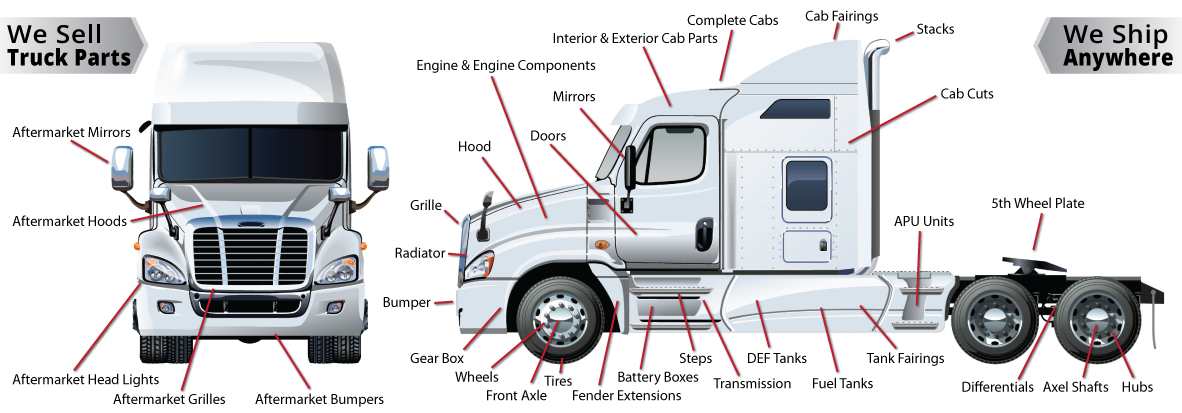

Section 2: The Drivetrain – Transferring Power to the Wheels
The drivetrain is responsible for transmitting the engine's power to the wheels, allowing the truck to move. Key components include:
- Clutch: Connects and disconnects the engine from the transmission, allowing for gear changes.
- Transmission: Provides multiple gear ratios to optimize engine power and speed for different driving conditions.
- Driveshaft: Transmits power from the transmission to the rear axles.
- Differential: Allows the rear wheels to rotate at different speeds when turning.
- Axle Shafts: Transmit power from the differential to the wheels.
- U-Joints (Universal Joints): Allow the driveshaft to flex and compensate for changes in angle.
Section 3: The Braking System – Ensuring Safe Stops
The braking system is arguably the most critical safety feature on a semi truck. It's essential to understand its components and ensure they are properly maintained.
- Air Compressor: (Mentioned earlier, but vital for braking)
- Air Tanks: Store compressed air for use by the braking system.
- Brake Valves: Control the flow of air to the brake chambers.
- Brake Chambers: Convert air pressure into mechanical force to apply the brakes.
- Slack Adjusters: Adjust the distance the brake pushrod travels, ensuring proper brake application.
- Brake Shoes/Pads: Press against the brake drums or rotors to slow the wheels.
- Brake Drums/Rotors: Rotate with the wheels and provide a surface for the brake shoes/pads to grip.
- ABS (Anti-lock Braking System): Prevents the wheels from locking up during braking, maintaining steering control.
- Jake Brake (Engine Brake): Uses the engine to slow the truck, reducing wear on the service brakes.
Section 4: Steering and Suspension – Handling and Ride Comfort
The steering and suspension systems work together to provide stable handling and a comfortable ride.
- Steering Wheel: Controls the direction of the truck.
- Steering Column: Connects the steering wheel to the steering gearbox.
- Steering Gearbox: Amplifies the driver's steering input and transmits it to the steering linkage.
- Steering Linkage: Connects the steering gearbox to the wheels.
- Tie Rods: Connect the steering linkage to the steering knuckles.
- Steering Knuckles: Pivot to allow the wheels to turn.
- Springs (Leaf Springs, Air Springs): Absorb shocks and vibrations from the road.
- Shock Absorbers: Dampen the movement of the springs, preventing excessive bouncing.
- Kingpins: Connect the axle to the steering knuckle, allowing the wheels to pivot.
Section 5: The Body and Chassis – The Foundation and Exterior
The body and chassis provide the structural support and exterior of the truck.
- Frame: The main structural component of the truck, providing a rigid platform for all other components.
- Cab: The driver's compartment.
- Hood: Covers the engine.
- Fenders: Protect the wheels and tires.
- Bumpers: Provide protection in the event of a collision.
- Fuel Tanks: Store fuel for the engine.
- Fifth Wheel: Connects the tractor to the trailer.
Section 6: Electrical System – Powering the Truck's Functions
The electrical system powers all the truck's electrical components, from the lights to the engine control unit.
- Batteries: Store electrical energy.
- Alternator: Charges the batteries while the engine is running.
- Starter: Cranks the engine to start it.
- Wiring Harness: Connects all the electrical components.
- Fuses: Protect the electrical circuits from overloads.
- Lights (Headlights, Taillights, Turn Signals): Provide visibility and signaling.
- ECU (Engine Control Unit): Controls the engine's operation.
- Sensors: Monitor various engine parameters, such as temperature, pressure, and speed.
Practical Advice and Actionable Insights
- Regular Inspections: Conduct thorough pre-trip and post-trip inspections to identify potential problems early.
- Preventative Maintenance: Follow the manufacturer's recommended maintenance schedule to keep your truck in top condition.
- Proper Lubrication: Use the correct type of oil and grease and follow the recommended lubrication intervals.
- Stay Informed: Keep up-to-date on the latest technology and best practices in the trucking industry.
- Build Relationships: Establish relationships with trusted mechanics and parts suppliers.
Potential Challenges and Solutions
- Parts Availability: Finding the right parts can sometimes be a challenge, especially for older trucks. Solutions include using online parts catalogs, contacting multiple suppliers, and considering aftermarket parts.
- Rising Parts Costs: The cost of semi truck parts can be significant. Solutions include shopping around for the best prices, considering remanufactured parts, and investing in preventative maintenance to extend the life of existing parts.
- Counterfeit Parts: Beware of counterfeit parts, which can be of poor quality and potentially dangerous. Purchase parts from reputable suppliers.
Conclusion: Empowering Your Trucking Knowledge
Understanding semi truck parts names is an essential skill for anyone involved in the trucking industry. By familiarizing yourself with the components discussed in this guide, you'll be better equipped to communicate with mechanics, troubleshoot problems, and make informed decisions about maintenance and repairs. Remember that a well-maintained truck is a safer and more efficient truck, ultimately contributing to your success on the road. Keep learning, stay informed, and keep your rig rolling smoothly!
Table: Semi Truck Parts Names and Estimated Prices (Approximate)
| Part Name | Description | Estimated Price Range |
|---|---|---|
| Cylinder Block | Engine's core structure | $2,000 - $8,000 |
| Cylinder Head | Top of the cylinders, with valves | $500 - $3,000 |
| Piston | Moves inside the cylinder | $100 - $500 (each) |
| Turbocharger | Forces air into the engine | $800 - $4,000 |
| Fuel Injector | Sprays fuel into the engine | $150 - $800 (each) |
| Water Pump | Coolant circulation | $100 - $500 |
| Oil Pump | Lubricant circulation | $150 - $600 |
| Air Compressor | Provides compressed air | $500 - $2,000 |
| Clutch Assembly | Connects/disconnects engine & transmission | $500 - $2,000 |
| Transmission (Complete) | Gearbox for various speeds | $3,000 - $10,000 |
| Driveshaft | Transmits power to rear axles | $300 - $1,500 |
| Differential | Allows wheels to rotate at different speeds | $1,000 - $4,000 |
| Brake Chamber | Converts air pressure to brake force | $50 - $200 (each) |
| Brake Rotor/Drum | Friction surface for braking | $100 - $500 (each) |
| Brake Pad/Shoe Set | Friction material for braking | $50 - $300 (per axle) |
| Shock Absorber | Dampens suspension movement | $50 - $200 (each) |
| Leaf Spring | Supports axle and absorbs shocks | $200 - $800 (each) |
| Air Spring | Air-filled suspension component | $150 - $600 (each) |
| Fifth Wheel | Connects tractor to trailer | $500 - $3,000 |
| Alternator | Charges the battery | $100 - $500 |
| Starter Motor | Starts the engine | $150 - $600 |
| Headlight Assembly | Provides illumination at night | $100 - $500 (each) |
| Note: Prices are estimates and can vary based on brand, quality, and location.* |
Frequently Asked Questions (FAQ)
Q: Where can I find reliable semi truck parts? A: Reputable truck dealerships, authorized parts suppliers, and online retailers specializing in heavy-duty truck parts are good options. Always verify the supplier's reputation and warranty policies.
Q: Are aftermarket parts as good as OEM (Original Equipment Manufacturer) parts? A: Some aftermarket parts can be as good as or even better than OEM parts, but it's crucial to research the manufacturer and read reviews. Choose reputable brands with proven track records.
Q: How often should I replace my semi truck tires? A: Tire replacement frequency depends on factors such as mileage, load, driving conditions, and tire maintenance. Regularly inspect your tires for wear and tear and follow the manufacturer's recommendations.
Q: What are some common signs of a failing engine? A: Common signs include decreased power, increased fuel consumption, unusual noises, excessive smoke, and oil leaks. Address these issues promptly to prevent further damage.
Q: How can I extend the life of my semi truck parts? A: Regular maintenance, proper lubrication, careful driving habits, and timely repairs can all contribute to extending the life of your semi truck parts.
This comprehensive guide provides a solid foundation for understanding semi truck parts names. Remember to continue learning and stay informed to keep your rig running smoothly and safely for years to come.