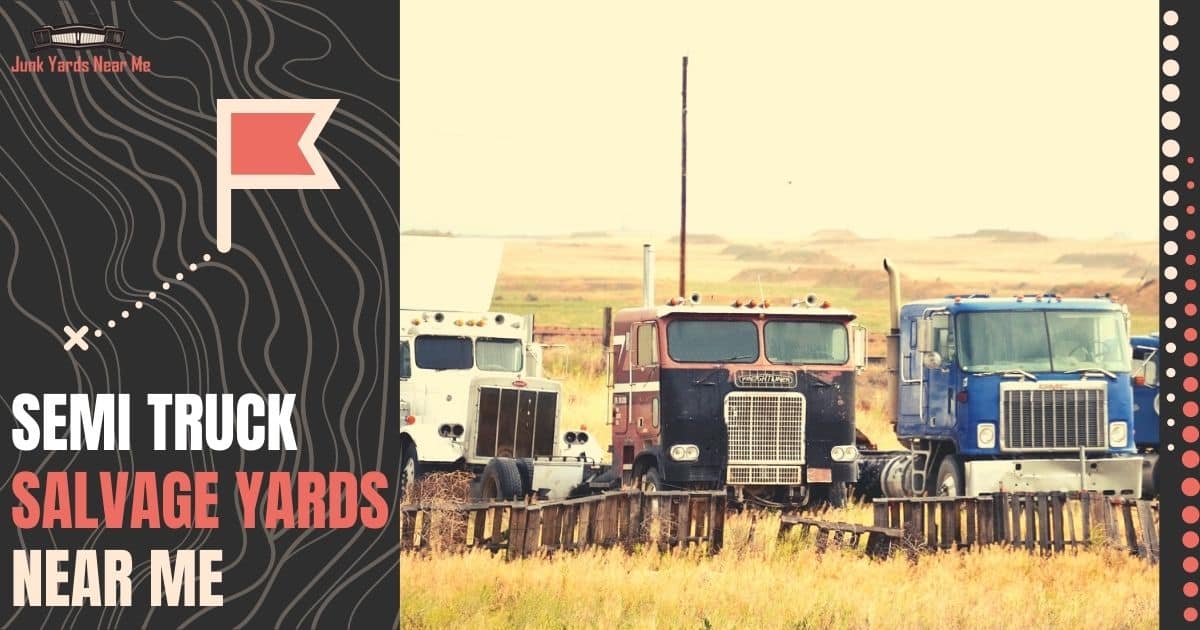
Whether you're an owner-operator patching up your rig, a fleet manager looking to cut costs, or simply someone interested in the inner workings of the trucking industry, semi-truck salvage yards can be a goldmine. These yards, often called truck junkyards or truck dismantling facilities, are where retired, damaged, or otherwise unusable semi-trucks find their final resting place. However, from this graveyard of metal and rubber emerges a treasure trove of used parts, components, and even entire trucks that can be repurposed, repaired, and put back on the road. This guide will delve into the world of semi-truck salvage yards near you, providing valuable information, practical advice, and everything you need to know to navigate this unique market.
Why Bother with Semi Truck Salvage Yards? The Benefits are Clear
Semi Truck Salvage Yards Near My Location: A Comprehensive Guide
Before diving into the specifics of finding and using semi-truck salvage yards, let's understand why they are a valuable resource. The benefits are numerous and impactful:
- Cost Savings: This is perhaps the most compelling reason. Used parts from salvage yards are significantly cheaper than new parts, often costing a fraction of the price. This can be a game-changer for independent truckers and small fleets operating on tight budgets.
- Availability of Obsolete Parts: Older trucks sometimes require parts that are no longer manufactured. Salvage yards are often the only place to find these discontinued or hard-to-find components.
- Environmental Responsibility: Recycling parts from salvaged trucks reduces the demand for new manufacturing, conserving resources and minimizing environmental impact. It's a sustainable approach to truck maintenance.
- Quick Repairs: Salvage yards can provide immediate access to parts, reducing downtime and getting trucks back on the road faster than waiting for new parts to be shipped.
- Potential for Customization: Some enthusiasts and builders use salvage yards to find unique parts for customizing or restoring trucks.
- Finding Complete Trucks for Projects: You might find a complete truck, albeit in need of repair, suitable for a specific project, training purpose, or even as a donor vehicle for other repairs.
Finding Semi Truck Salvage Yards Near You: A Step-by-Step Guide
Locating a salvage yard that specializes in semi-trucks requires a bit of research. Here's a practical guide to help you find the best options in your area:

Online Search Engines: Start with the basics. Use search engines like Google, Bing, or DuckDuckGo. Use specific keywords such as:
- "Semi Truck Salvage Yards [Your City, State]"
- "Truck Junkyards Near Me"
- "Commercial Truck Dismantlers [Your County, State]"
- "Used Semi Truck Parts [Your Region]"
- "Heavy Duty Truck Salvage [Your Area]"
-
Online Directories: Utilize online directories that specialize in automotive and industrial businesses. Some useful directories include:
- Yellow Pages
- Yelp
- IndustryNet
- ThomasNet
- Specialized trucking industry directories (search online for "trucking industry directory")
-
Trucking Forums and Online Communities: Engage with online communities dedicated to trucking and truck maintenance. Ask for recommendations from experienced truckers in your region. They often have insider knowledge about local salvage yards.
-
Contact Local Truck Repair Shops and Dealerships: Truck repair shops and dealerships often have relationships with salvage yards. They can provide recommendations or even help you source parts.
-
Check Auction Sites: Some salvage yards list their inventory or even entire trucks on online auction sites like eBay, GovPlanet, or specific heavy equipment auction platforms.
-
Use Mapping Apps: Once you have a list of potential salvage yards, use mapping apps like Google Maps or Apple Maps to verify their location and get directions.
-
Call Ahead: Before visiting a salvage yard, call them to confirm their hours of operation, inventory, and payment methods. Also, inquire about their policies regarding warranties and returns.
Navigating the Salvage Yard: Tips for a Successful Visit
Once you've found a few salvage yards, it's time to plan your visit. Here are some tips to make the most of your trip:
- Do Your Homework: Know exactly what parts you need. Research the specific make, model, and year of the truck you're working on. Having part numbers is extremely helpful.
- Dress Appropriately: Wear sturdy shoes, gloves, and work clothes that you don't mind getting dirty. Salvage yards can be messy and potentially hazardous environments.
- Bring Your Tools: Most salvage yards allow you to remove the parts yourself. Bring your own tools, including wrenches, sockets, screwdrivers, and potentially a jack and jack stands.
- Safety First: Be aware of your surroundings. Watch out for sharp objects, unstable vehicles, and other potential hazards.
- Inspect Carefully: Thoroughly inspect the parts you're interested in before purchasing them. Look for signs of damage, wear, or corrosion.
- Negotiate the Price: Don't be afraid to negotiate. Salvage yards are often willing to lower their prices, especially if you're buying multiple items.
- Ask About Warranties: Inquire about warranties or guarantees on the parts you're purchasing. Some salvage yards offer limited warranties on certain items.
- Payment Methods: Confirm accepted payment methods before removing anything.
- Bring Help: If you are removing heavy items, bring assistance.
Important Considerations When Buying Used Truck Parts
Buying used truck parts from a salvage yard can save you money, but it's crucial to be aware of the potential risks and take necessary precautions:
- Part Compatibility: Ensure that the parts you're buying are compatible with your truck's make, model, and year. Using the wrong parts can damage your vehicle.
- Part Condition: Carefully inspect the parts for damage, wear, or corrosion. Consider the potential lifespan of the used part compared to a new one.
- Rust and Corrosion: Pay close attention to rust and corrosion, especially in areas prone to these issues.
- Electrical Components: Electrical components from salvage yards can be unreliable. Test them thoroughly before installing them.
- Brake Components: Exercise caution when purchasing used brake components. Ensure they meet safety standards and are in good working condition. It's often best to replace critical brake components with new ones.
- Engine and Transmission Parts: Used engine and transmission parts can be a gamble. Thoroughly inspect them and consider having them professionally inspected before installation.
- Documentation: Keep records of all your purchases, including receipts and any warranty information.
Types of Parts Commonly Found at Semi Truck Salvage Yards
Semi-truck salvage yards typically carry a wide range of parts and components, including:
- Engines: Complete engines, engine blocks, cylinder heads, and other engine components.
- Transmissions: Complete transmissions, transmission cases, and individual transmission parts.
- Axles: Front and rear axles, axle shafts, and differential components.
- Suspension: Springs, shocks, airbags, and other suspension components.
- Brakes: Brake drums, brake rotors, brake calipers, brake lines, and ABS components.
- Wheels and Tires: Wheels, tires, and rims.
- Body Parts: Hoods, fenders, doors, bumpers, grilles, and other body panels.
- Cabs: Complete cabs, or cab components.
- Electrical: Starters, alternators, batteries, wiring harnesses, and other electrical components.
- Interior: Seats, dashboards, instrument panels, and other interior components.
- Fuel System: Fuel tanks, fuel pumps, and fuel injectors.
- Exhaust System: Exhaust manifolds, mufflers, and exhaust pipes.
Potential Challenges and Solutions
Using semi-truck salvage yards can present some challenges. Here's how to overcome them:
- Finding the Right Part: The inventory at salvage yards can be unpredictable. Be patient and persistent in your search. Expand your search radius if necessary.
- Part Quality: The condition of used parts can vary greatly. Thoroughly inspect the parts and ask about warranties.
- Time Commitment: Removing parts yourself can be time-consuming. Plan accordingly and bring the necessary tools and equipment.
- Transportation: Transporting large or heavy parts can be challenging. Consider renting a truck or trailer.
- Safety Hazards: Salvage yards can be hazardous environments. Be aware of your surroundings and take necessary safety precautions.
Price Table: Example Pricing for Common Parts
Note: Prices can vary widely depending on the salvage yard, part condition, and market demand. These are estimates only.
| Part | Condition | Estimated Price Range |
|---|---|---|
| Used Engine (Complete) | Used | $2,000 - $10,000 |
| Used Transmission | Used | $1,000 - $5,000 |
| Used Front Axle | Used | $500 - $2,000 |
| Used Hood | Used | $200 - $800 |
| Used Starter | Used | $50 - $200 |
| Used Alternator | Used | $50 - $200 |
| Used Brake Caliper (Single) | Used | $30 - $100 |
| Used Wheel | Used | $50 - $150 |
| Used Tire | Used | $50 - $200 |
| Used Seat | Used | $100 - $500 |
Frequently Asked Questions (FAQ)
-
Q: Are all parts at salvage yards damaged?
- A: No. Some parts are from trucks that were retired due to age or mileage, not necessarily damage.
-
Q: Can I return a part if it doesn't fit?
- A: It depends on the salvage yard's policy. Always ask about their return policy before making a purchase.
-
Q: Is it safe to buy used brake parts?
- A: It's generally recommended to replace critical brake components with new ones. However, if you choose to buy used brake parts, inspect them very carefully.
-
Q: Do salvage yards offer installation services?
- A: Some do, but most do not. You'll likely need to install the parts yourself or hire a mechanic.
-
Q: How can I be sure the part I'm buying is compatible with my truck?
- A: Check the part number, VIN, and other identifying information to ensure compatibility. Consult with a mechanic if you're unsure.
Conclusion
Semi-truck salvage yards are a valuable resource for anyone involved in the trucking industry. By following the tips and guidelines outlined in this guide, you can find the parts you need at a fraction of the cost of new parts. Remember to do your research, inspect carefully, and prioritize safety. With a little effort, you can unlock the treasure trove of used truck parts waiting to be discovered at salvage yards near you, saving money and keeping your rigs rolling. The future of trucking maintenance may very well depend on these resources as environmental concerns grow.